










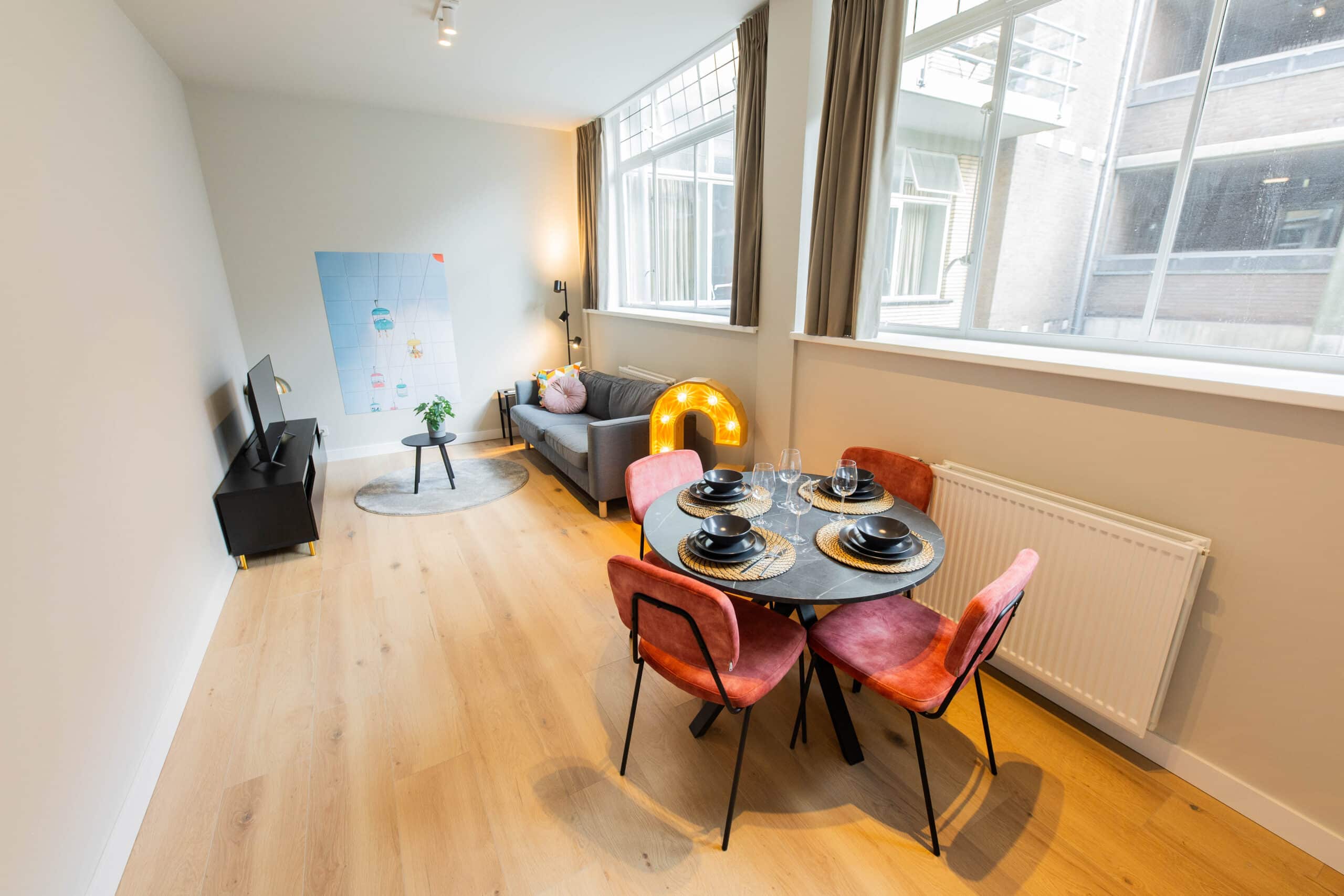
A low nightly rate is a useful starting point. It is not a complete budget. When comparing serviced apartments with hotels for a longer visit, the better question is: what will this particular stay cost, with the routine you actually expect to have?
Start with the same dates and the same needs
Use identical arrival and departure dates, the same number of registered guests and comparable cancellation conditions. An inexpensive non-refundable offer is not directly comparable with a booking that allows changes. Neither is one studio automatically a substitute for two bedrooms.
Write down the requirements before looking at prices: separate sleeping space, cooking facilities, a place to work, parking or access to your daily destination. Compare only options that meet those needs. Otherwise, the lowest quote may simply be the one for a different kind of stay.
Ask for the total accommodation price
Record the final price for the entire stay, not a “from” price multiplied by your number of nights. Nightly rates may differ across the dates you select. Check whether taxes and cleaning are already included in the displayed total before adding anything yourself.
Alphabet’s published payment information describes the total as the nightly charges, tourist tax, cleaning fee, VAT and any additional services you book. The selected booking summary is the place to check the actual amounts. This guide does not quote a tariff or calculate tax rates.
Add the spending that happens outside the booking
A kitchen creates a choice; it does not guarantee a saving. Estimate how many breakfasts or dinners you would genuinely prepare, then allow for groceries as well as meals out. If you intend to eat in restaurants every evening, do not credit the apartment with an imaginary food saving.
Do the same for transport. A less expensive apartment can lose its price advantage if it adds a paid journey twice a day. Compare the exact route to the office, family or project site. Include parking or public transport only when you expect to use it, and check the current costs separately.
Keep the deposit separate from the stay cost
A security deposit affects the money you need available, but it is not the same as an accommodation charge. At Alphabet, a separate deposit of €150–€300 is paid during online check-in through the Alphabet Stay app. Check the amount and return conditions for your booking.
Keep two totals: the expected cost of the stay, and the amount you need available at each payment date, including the deposit. This avoids counting the deposit as ordinary spending or overlooking it when planning your cash flow. Do not assume a return date that has not been confirmed.
Compare a realistic three-week visit
For an illustrative 21-night assignment, list the final accommodation quote, your expected meals, commuting and any extras for each option. Divide the comparable total by 21 to see the effective daily cost. If two colleagues share, first check that the occupancy and sleeping arrangements suit both people before calculating a per-person figure.
Keep assumptions visible. Label estimates for meals and travel as estimates, and use the actual booking quote for accommodation. There is no honest universal percentage by which an apartment beats a hotel: the result depends on the dates, property, chosen rate and how you live during the visit.
Check what happens when the plan changes
For a project or relocation, ask what an extra week would require and what happens if you leave earlier. An extension is not guaranteed, and a change may involve a different rate or apartment. Read the conditions of the selected offer instead of relying on the word “flexible”.
For business bookings, agree invoice details, the person responsible for payment and any payment schedule before reserving. Alphabet normally requires payment before arrival; a different schedule for corporate invoicing must be agreed with the team. Payment at the property is not available.
Your comparison sheet
- Final accommodation quote for the exact dates and guest count
- Included taxes, cleaning and services: do not count them twice
- Realistic meals, commuting, parking and requested extras
- Separate deposit and payment dates
- Cancellation, early departure and extension conditions
Choose the stay that works after the first night
Compare the figures alongside the practical benefits you will use. A table, a kitchen and space to settle in have value when they fit your routine. They are not a reason to ignore the final price. Explore the apartments, choose your dates and check the full booking summary before deciding.